November 11 – Kenya has little more than seven months to prepare for its co-hosting Africa’s biggest football tournament. Its football federation, meanwhile, has spent the past week mired in a leadership dispute.
The latest round of the Football Kenya Federation’s (FKF) leadership battle ended with police firing tear gas at a special general meeting in Meru, vice-president McDonald Mariga and six executive members being expelled, and Mariga taking the fight to FIFA.
Saturday’s meeting at the Three Steers Hotel had been called to deal with the conduct of seven members of the FKF National Executive Committee who have been at odds with president Hussein Mohammed.
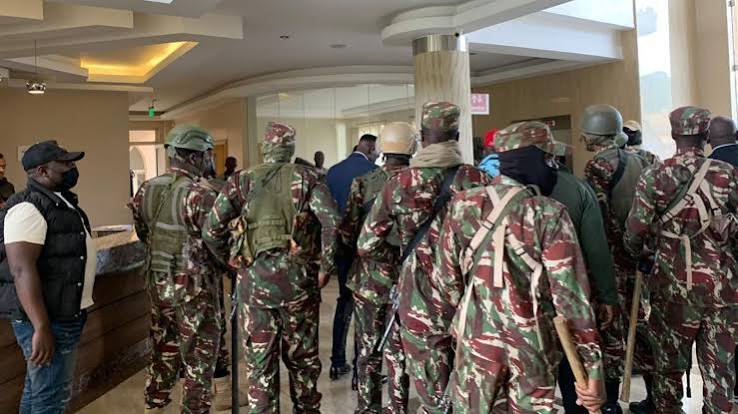
Police were deployed around the venue and tear gas was fired as officials and rival groups gathered inside. Mariga arrived with an armed police escort but was later prevented from entering the meeting, which eventually went ahead after several hours of disruption.
Sixty-six of the FKF’s 92 delegates attended. Mariga and several of his allies were removed by votes of 65 in favour, with the remaining expulsions receiving similarly overwhelming support.
Mariga disputes both the process and who was allowed to take part.
He has now petitioned FIFA to overturn his removal, arguing that those facing expulsion were denied a proper hearing, accredited delegates were kept out and a secret ballot was not held.
“Due process was not followed in removing us,” he told the Daily Nation.
Mariga said he has handed FIFA material relating to the dispute and is also consulting lawyers over a possible challenge at Kenya’s Sports Disputes Tribunal.
The breakdown is particularly striking because Mohammed and Mariga arrived at the FKF together. They were elected president and vice-president in December 2024 as the ‘Team Fresh’ ticket, but the relationship has since collapsed into two rival camps within the executive committee.
The split became public in April when a Mariga-aligned group attempted to suspend Mohammed, acting general secretary Dennis Gicheru and NEC member Abdullahi Yusuf over allegations surrounding a KSh42.48 million (£243,724) insurance arrangement.
Those allegations are still disputed but no charges of fraud have been brought.
Earlier this month FIFA blocked an NEC meeting called by Mariga’s faction, ruling that the request being relied upon did not provide a valid constitutional basis to convene it.
Mohammed has defended Saturday’s expulsions, maintaining that the seven officials were invited to answer the charges against them. His opponents say they were prevented from doing so.
Kenya will stage the 2027 Africa Cup of Nations alongside Uganda and Tanzania from June 19 to July 17. There is no suggestion from CAF that Kenya’s hosting rights are under threat, and much of the infrastructure work sits with government and the local organising committee rather than the FKF alone.
Contact the writer of this story, Harry Ewing, at [email protected]
PakarPBN
A Private Blog Network (PBN) is a collection of websites that are controlled by a single individual or organization and used primarily to build backlinks to a “money site” in order to influence its ranking in search engines such as Google. The core idea behind a PBN is based on the importance of backlinks in Google’s ranking algorithm. Since Google views backlinks as signals of authority and trust, some website owners attempt to artificially create these signals through a controlled network of sites.
In a typical PBN setup, the owner acquires expired or aged domains that already have existing authority, backlinks, and history. These domains are rebuilt with new content and hosted separately, often using different IP addresses, hosting providers, themes, and ownership details to make them appear unrelated. Within the content published on these sites, links are strategically placed that point to the main website the owner wants to rank higher. By doing this, the owner attempts to pass link equity (also known as “link juice”) from the PBN sites to the target website.
The purpose of a PBN is to give the impression that the target website is naturally earning links from multiple independent sources. If done effectively, this can temporarily improve keyword rankings, increase organic visibility, and drive more traffic from search results.